

ב"ה
Only after a week of eating the manna in the desert did the Jewish people give it a name. Why did they wait that long? In answering this question, this class will explain the deeper connection between manna and the Sabbath, inasmuch that the Jewish people were first introduced to the observance of Shabbat in relation to the way in which they were to partake of the manna. (Likutei Sichos vol. 31)
Rabbi Yisrael Deren and his wife Vivi have faced the unimaginable—the loss of four of their eight children. Instead of retreating into grief, they chose to transform their pain into purpose, becoming a source of strength and comfort for others walking through darkness. Rabbi Deren shares deeply personal stories and with honesty and faith, he reflects on how each loss reshaped their lives. This is not only a story about grief, but about resilience, community, and the eternal bond between parent and child. Rabbi Deren offers hard-won wisdom on finding G-d in life’s darkest corners, transforming loneliness into connection, and discovering meaning even in the depths of pain.
Gratitude is more than positive thinking — it is a spiritual lens that changes everything it touches. Explore the Chassidic approach to gratitude and how daily appreciation elevates the small, the ordinary, and even the challenging. Learn how practicing gratitude increases joy, strengthens relationships, and opens your life to abundance.
Only after a week of eating the manna in the desert did the Jewish people give it a name. Why did they wait that long? In answering this question, this class will explain the deeper connection between manna and the Sabbath, inasmuch that the Jewish people were first introduced to the observance of Shabbat in relation to the way in which they were to partake of the manna. (Likutei Sichos vol. 31)
A gathering of unity and remembrance
Thirty days on, Chabad of Bondi and the Sydney community come together to pause, remember, and stand united as we commemorate the 30 days of mourning for the Kedoshim, holy martyrs, who were murdered sanctifying G-d’s name. We also pray for the injured, stand with their families, and affirm the values of faith, healing, and hope that carry us forward.
Life Lessons from Parshat Beshalach
Shortly after leaving Egypt, the children of Israel found themselves in an impossible situation, stuck between the sea in front of them and the Egyptian army chasing them from behind. The proper response contains a powerful lesson in surmounting seemingly impossible challenges.
Only after a week of eating the manna in the desert did the Jewish people give it a name. Why did they wait that long? In answering this question, this class will explain the deeper connection between manna and the Sabbath, inasmuch that the Jewish people were first introduced to the observance of Shabbat in relation to the way in which they were to partake of the manna. (Likutei Sichos vol. 31)
Life Lessons from Parshat Beshalach
Shortly after leaving Egypt, the children of Israel found themselves in an impossible situation, stuck between the sea in front of them and the Egyptian army chasing them from behind. The proper response contains a powerful lesson in surmounting seemingly impossible challenges.
Letters and Numbers of Torah - Beshalach
After fighting a war with the nation of Amalek, Moses says (Exodus 17:16) “There is a hand on the throne of G-d [swearing] that there shall be a war of G-d against Amalek from generation to generation.” In this verse, G-d's four-letter name is missing the letters vav and hei. What is the connection between the completion of G-d's name and the defeat of Amalek?
Two essential lessons from the Exodus for every Jew:
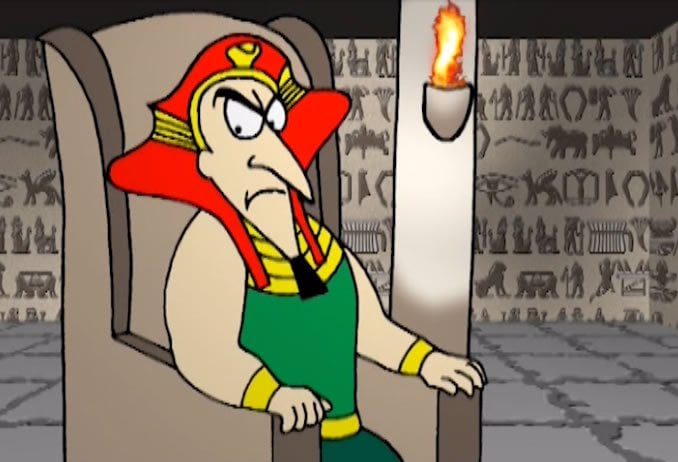
Pharaoh, the mightiest king in the world, ruthlessly oppressed the Jewish People. Yet his behavior completely reversed, and, instead of afflicting the Jews, “Pharaoh sent the people away...”.
Then the Torah relates: “G-d did not lead the Jews through the Land of the Philistines… lest they see war, reconsider, and return to Egypt.” G-d does not command us to follow a path in which we cannot succeed. “G-d prepares the steps of man” – when G-d leads a person to a certain place, and, through the teachings of the Torah, gives him a mission to accomplish, this, itself, proves that he has all the capabilities he needs to succeed.
The Israelites were exiled in Egypt and forced to engage in slave labor, yet, when their redemption finally came, there were some who didn’t want to leave exile! Life became easy as soon as the slave-labor ceased, so they began complaining, “Why do we need to search for Torah and Judaism in the desert, and follow a wild individual like Moses? We have a competent king, culture and wisdom – let’s remain. But G-d sent a warning through Moses, that Pharaoh will “banish them from his land.” A Jew isn’t given a choice in the matter.
11 Nissan, 5744 • April 12, 1984
G‑d created plants and animals with the ability to procreate – to perpetuate themselves and reflect G‑d’s own Infinitude. Man, too, was granted the remarkable ability to reproduce, but was additionally blessed with the ability to harness and expand the infinite powers hidden within the rest of nature.
13 Shevat 5749 · January 19, 1989
“Man is a tree of the field.” The Sages of the Talmud apply this verse to the Jew. Torah is the
core of a Jew’s being, and Torah must effect his actions so that he bears good fruits — good
deeds. But when we say that a Jew must be “fruitful,” first and foremost he must reproduce
his own essence.
Nutrition from Shamayim
Can the New Year for Trees be a time for reflecting on the mitzvah of taking care of our health? Learn more about the meaning of Tu B’Shevat, and some of the health and healing properties of the fruits mentioned in Deuteronomy 8:8: “A land of wheat, barley, grapes, figs and pomegranates; a land of oil-yielding olives and [date] honey.”
In 1941, the Rebbe travelled to Marseilles, France, to obtain entry visas to the United States for himself and his wife, Rebbetzin Chaya Mushka. While there, the Rebbe maintained his characteristic low profile, but at a gathering in honor of the New Year for Trees, he gave those
present a taste of things to come. (1941)
The origin and meaning of this custom
Our proverbial New Year for Trees is celebrated by most Sephardic Jews (and more recently by many Israelis of Ashkenazi descent as well) with an elaborate fruit-centric sacred ceremony colloquially known as the “Tu B’Shevat Seder.” It’s comprised of carefully choreographed chanting of Scripture and Rabbinic texts, accompanied by an assortment of fruit and wine, which are consumed in an orderly fashion. But why invoke unique Passover verbiage for this fruitful observance? This fascinating presentation sheds light on some of the origins and profound meanings of this enigmatic Torah tradition.
Get the Chabad.org Video app